
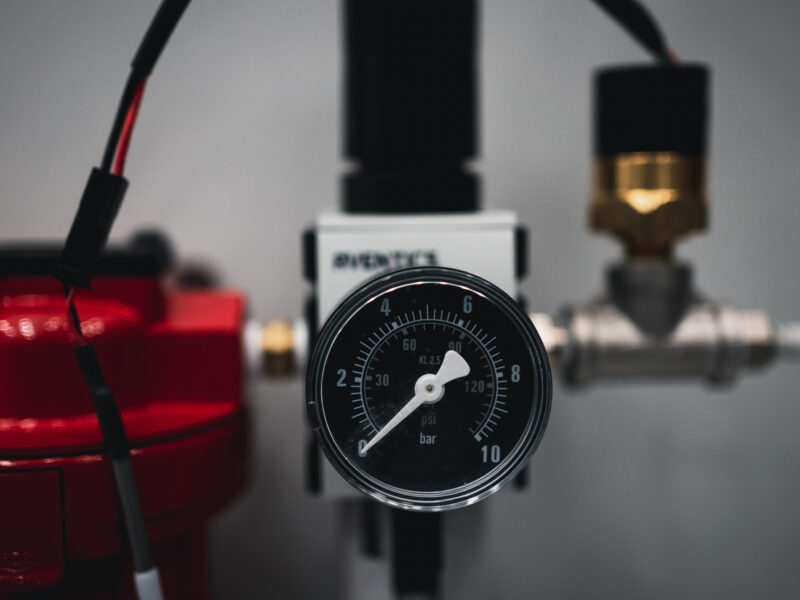
In industrial automation, temperature and pressure are deeply interconnected variables. Fluctuations in ambient or process temperature can significantly influence the physical properties of sensing materials and the gas being measured, potentially leading to set point drift or inaccurate readings. At Whitman Controls, vacuum and pressure switches are engineered to operate reliably across extensive temperature ranges, often from -65°F to 225°F to ensure stability in the most demanding environments.
How Mechanical and Thermal Forces Affect Sensing Elements
The internal sensing element of a vacuum switch, typically a flexible diaphragm or capsule, is governed by the laws of thermal expansion. As temperatures rise or fall, the materials constructing these elements experience subtle changes in elasticity or volume, directly affecting the force required to actuate the switch.
- Thermal Expansion: In high-temperature applications such as medical X-ray systems or silicon wafer ovens, component expansion can cause a measurable shift in the calibrated set point, a shift that goes undetected without regular calibration checks.
- Media Density Changes: Gases and liquids are temperature-dependent in density. As temperature rises, specific gravity often decreases, which can introduce reaction lag in level and vacuum switches, a critical concern in processes where split-second response matters.
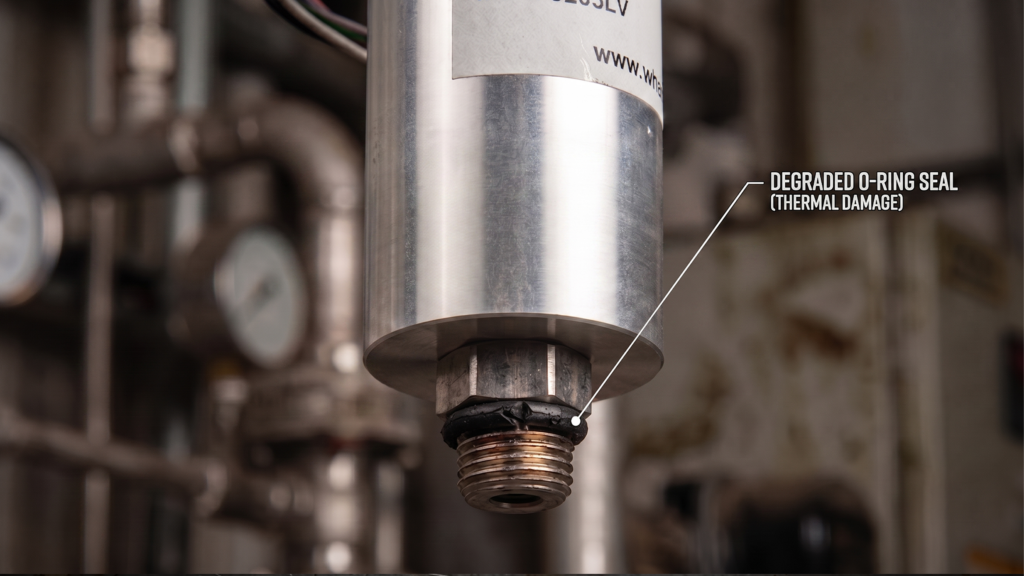
- Wetted Material Integrity: Extreme temperatures accelerate corrosion and degrade elastomeric seals such as O-rings if the materials are not specifically selected for the operating environment. Material compatibility is not optional, it is a baseline requirement.
- Extreme Operating Limits: Whitman sensors are designed to handle wide thermal swings, with select models rated for continuous use up to 100°C (212°F), and specialized configurations available for oil bath environments that exceed this threshold
Compensating for Temperature-Driven Inaccuracy
Maintaining measurement precision requires deliberate temperature compensation strategies during both switch selection and installation. This is especially critical in industries where process controls must remain repeatable down to fractions of a percent.
- Absolute vs. Gauge Reference: For processes with wide temperature swings, absolute pressure reference models are often the better choice. Unlike gauge models, they do not subtract the influence of the surrounding atmosphere, which itself changes with temperature making them inherently more stable under thermal variation.
- Calibration Standards: Regularly scheduled test and calibration procedures are strongly recommended. Prolonged exposure to thermal extremes can cause gradual drift, and a switch that was accurate at installation may not remain so six months later without verification.
- Hygienic and Ultra-Pure Lines: In semiconductor and high-tech fabrication environments, Whitman’s Ultra Pure line features helium-leak checked, stainless steel welded interiors. These remain dimensionally and chemically stable under thermal stress without introducing impurities into sensitive process streams.
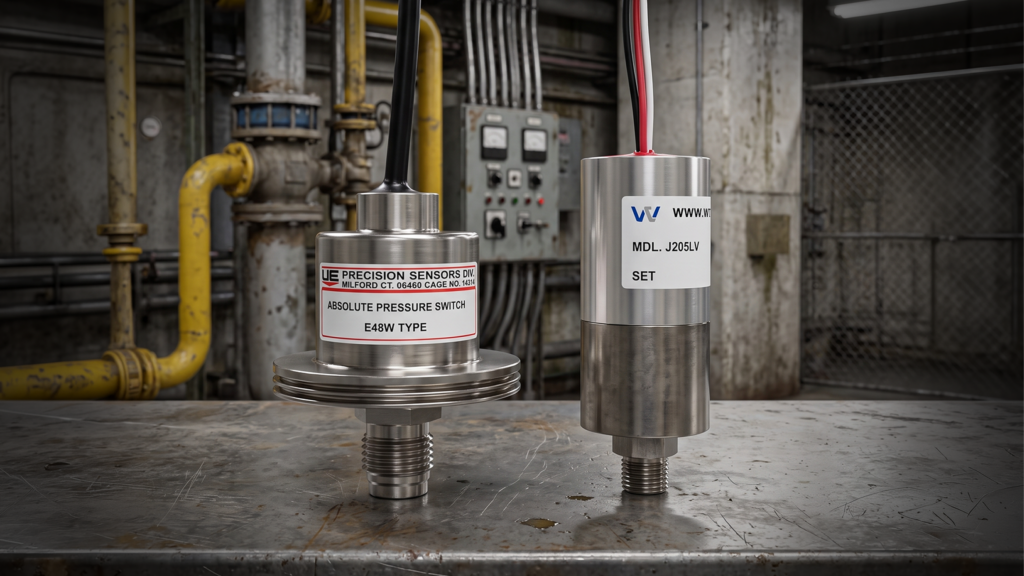
- Standardized Repeatability: Models like the J205V are specifically engineered for high repeatability even when exposed to elevated system pressures and temperature variation, making them a dependable choice for processes where consistency is non-negotiable.
Industry-Specific Temperature Challenges
Modern industrial processes increasingly combine high-vacuum requirements with extreme thermal loads. Selecting the right sensor is not a matter of preference, it is a matter of system safety and process integrity.
- Semiconductor Atomic Layer Deposition (ALD): ALD processes demand instrumentation capable of high accuracy and rapid responsiveness at elevated temperatures. Even minor over-dispensing of expensive precursor chemicals, caused by a sluggish or drifted sensor can compromise entire wafer batches.
- Thermal Liquid Processing: Sealed systems such as dairy evaporators and cooling water condensers experience wide thermal swings during normal operation. Absolute pressure reference switches are the standard selection here, where boiling point and condensation thresholds must be tightly controlled.
- Outdoor and Mobile Equipment: Wetland vehicles and solar pumping systems operate in fully exposed environments where temperatures can range from well below freezing to extreme solar-driven heat, sometimes within the same 24-hour cycle. Sensors must be mechanically robust and sealed against both moisture and temperature extremes.
- Medical Cooling Systems: X-ray tube cooling circuits require sensors rated to withstand up to 105°C continuously. These sensors must reliably detect pressure anomalies before they escalate to safety-critical levels, with no tolerance for false readings or delayed response.
About Whitman Controls and Industrial Control Solutions
Whitman Controls, part of Industrial Control Solutions, has been manufacturing precision vacuum, temperature, pressure, and liquid level switches and sensors for over 40 years. What began as a focused instrumentation manufacturer has grown into a trusted name across some of the most demanding industries in the world – aerospace, defense, semiconductor, medical and industrial automation.
As a Service-Disabled Veteran-Owned Small Business, Industrial Control Solutions was built on the same principles that define military service: tireless dedication, rigorous quality standards, and an unwavering commitment to the mission. That foundation isn’t marketing language, it shapes how we engineer every product, handle every order, and support every client relationship.
We don’t offer off-the-shelf compromises. Every sensor solution we build is configurable to your exact application, accounting for media environment, pressure range, temperature exposure, mounting constraints, and dozens of other specifications. If a standard product doesn’t meet your requirements, we build one that does and we back it with full documentation and traceability at every step.
Every product ships with full traceability documentation under our ISO 9001:2015 certification, giving customers confidence that internal processes, materials, and finished products have all met the highest standards of quality and regulatory compliance.
At Industrial Control Solutions, our most loyal clients have been with us for the entirety of our 40+ years in business. That kind of partnership isn’t accidental. It is the direct result of a commitment to delivering exactly what we promise; high-quality products, built to specification, backed by people who stand behind their work.
Our product portfolio spans four specialized USA-manufactured lines:
Whitman Controls – Vacuum, pressure, temperature, and liquid level switches engineered for precision and durability in extreme environments
Load Controls – Pump load controls, compact power sensors, fast-response load controllers, current sensors, and VFD-compatible solutions
Thomas Products – Flow switches, level switches, pump controls, multi-level switches, and visual indicators
Duro-sense – High-quality platinum and noble thermocouples, RTDs, and ISO 17025 calibrated wire
Frequently Asked Questions
Q1: How does temperature affect the accuracy of a vacuum switch?
Temperature causes the sensing element, typically a diaphragm or capsule to expand or contract. This physical change alters the force needed to actuate the switch, which can shift the calibrated set point and produce false readings or missed actuations in precision processes.
Q2: What is temperature compensation in vacuum and pressure switches?
Temperature compensation refers to the combination of material selection, design engineering, and calibration practices that account for thermal-driven changes in sensing components and process media. A properly compensated switch maintains accurate, repeatable performance across its full rated temperature range rather than drifting as conditions change.
Q3: When is an absolute pressure reference switch preferred over a gauge reference switch?
Absolute pressure reference switches are the better choice in processes that experience wide or frequent temperature swings. Because they measure against a fixed internal vacuum reference rather than fluctuating atmospheric pressure, they are not affected by ambient temperature-driven changes in the surrounding atmosphere, delivering more consistent readings in thermally variable environments.
Q4: How often should vacuum switches be recalibrated in high-temperature environments?
There is no universal interval, but regular scheduled calibration is strongly recommended for any switch operating under prolonged thermal extremes. Over time, exposure to heat cycling can cause gradual set point drift that is not detectable during normal operation. Frequency should be determined based on process criticality, operating temperature range, and the manufacturer’s guidelines.
Q5: Which Whitman Controls products are best suited for high-temperature vacuum applications?
For high-temperature environments, Whitman’s Ultra Pure line with helium-leak checked stainless steel welded interiors is well suited to thermally demanding, contamination-sensitive applications. The J205V model is engineered for high repeatability under combined pressure and temperature stress. For applications above 100°C, specialized oil bath configurations are also available. Consulting a Whitman Controls engineer is recommended for applications with specific thermal and media requirements.