
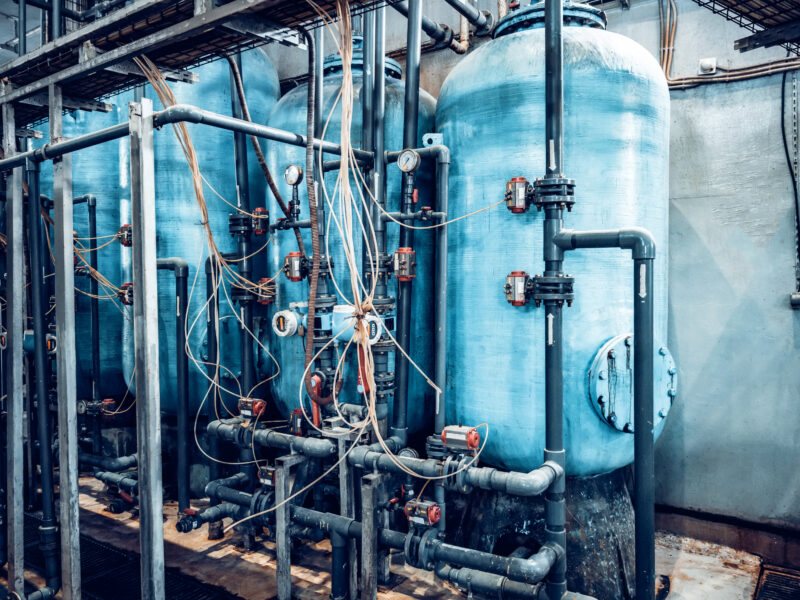
Hydraulic systems are only as reliable as the filters protecting them. When a filter becomes clogged, the entire system is at risk from pump erosion to full component failure. Differential pressure (ΔP) monitoring is the most precise, cost-effective method for determining the remaining useful life of a hydraulic filter element, without the guesswork of time-based schedules.
At Whitman Controls, part of Industrial Control Solutions, we engineer rugged differential pressure switches designed for hydraulic filter monitoring in demanding industrial applications, providing reliable indication when filter differential pressure reaches a predetermined set point.
What Is Differential Pressure in a Hydraulic Filter Circuit?
A differential pressure switch connects to two process ports: one upstream (high-pressure inlet side) and one downstream (low-pressure outlet side) of the filter element. The device continuously measures the pressure difference between these two points:
ΔP = P(Upstream) − P(Downstream)
As particulate contamination accumulates within the filter media, resistance to fluid flow increases. The downstream pressure falls while upstream pressure holds steady. When ΔP climbs past a calibrated threshold commonly 25 PSI or 50 PSI, the switch actuates, signaling maintenance is required before the system reaches a critical state.
How Differential Pressure Monitoring Prevents Hydraulic Bypass
Most hydraulic filter housings incorporate a mechanical bypass valve designed to open automatically if the filter becomes fully blocked. While this protects the element from structural collapse, it allows unfiltered, contaminated fluid to circulate through sensitive pumps, servo valves, and actuators, causing accelerated wear or sudden failure.
Differential pressure monitoring addresses this risk through three mechanisms:
- Early warning before bypass: A ΔP switch can be calibrated to trigger at 80–90% of the bypass threshold, giving maintenance teams actionable lead time to schedule a filter replacement while the system is still operating cleanly.
- Automated system protection: The switch output integrates directly with a PLC or operator panel, activating a “Change Filter” indicator lamp or triggering a low-flow alarm before contamination enters the circuit.
- Cold-start thermal compensation: Hydraulic fluid is significantly more viscous at low temperatures, causing an artificially elevated ΔP reading at startup. Modern installations often include a thermal lockout circuit that inhibits the pressure switch until the oil reaches normal operating temperature, eliminating false maintenance alerts.
Engineering Considerations for Hydraulic Differential Pressure Switches
Hydraulic systems present distinct challenges that demand purpose-built instrumentation:
- High static pressure tolerance: In a typical industrial hydraulic circuit, the static working pressure may reach 3,000 PSI or higher, even when the differential being measured is only 25–50 PSI. Every switch in this application must be rated to withstand the full system pressure without seal failure or housing distortion.
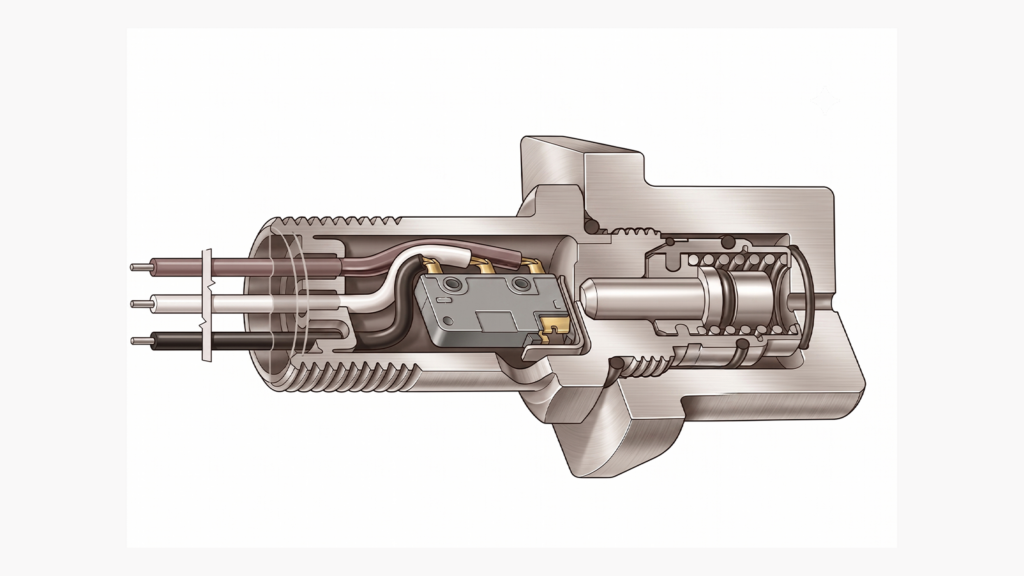
- Pressure surge resistance: Rapid valve cycling generates pressure spikes that can exceed normal operating pressure. The Whitman P845 differential pressure switch is designed for hydraulic differential pressure monitoring where reliable indication under demanding operating conditions is essential.
- Hydraulic fluid compatibility: Seal materials must be chemically compatible with the specific fluid in service. Common hydraulic media – mineral oil, water-glycol solutions, and synthetic ester fluids, each require different elastomer formulations to prevent O-ring swelling, hardening, or embrittlement over time.
The Business Case: ROI of Condition-Based Filter Maintenance
Transitioning from time-based to condition-based filter maintenance, using ΔP as the trigger generates measurable returns across several cost categories:
- Reduced consumables spend: Filters replaced on a fixed schedule (e.g., every 500 operating hours) are frequently discarded while still serviceable. ΔP monitoring ensures replacement happens only when the element is genuinely saturated, extending average filter life.
- Extended pump and valve service life: By ensuring the system never enters bypass, fine contaminant particles, the “silt” responsible for internal pump erosion are continuously captured. This directly reduces the incidence of catastrophic pump failures and unplanned downtime.
- Documented maintenance compliance: For ISO 9001:2015 certified facilities, ΔP switch signals provide timestamped, verifiable records that hydraulic systems were serviced in accordance with OEM specifications, supporting both internal audit requirements and customer quality documentation.

About Whitman Controls and Industrial Control Solutions
Whitman Controls, part of Industrial Control Solutions, has been manufacturing precision vacuum, temperature, pressure, and liquid level switches and sensors for over 40 years. What began as a focused instrumentation manufacturer has grown into a trusted name across some of the most demanding industries in the world – aerospace, defense, semiconductor, medical and industrial automation.
As a Service-Disabled Veteran-Owned Small Business, Industrial Control Solutions was built on the same principles that define military service: tireless dedication, rigorous quality standards, and an unwavering commitment to the mission. That foundation isn’t marketing language, it shapes how we engineer every product, handle every order, and support every client relationship.
We don’t offer off-the-shelf compromises. Every sensor solution we build is configurable to your exact application, accounting for media environment, pressure range, temperature exposure, mounting constraints, and dozens of other specifications. If a standard product doesn’t meet your requirements, we build one that does and we back it with full documentation and traceability at every step.
Every product ships with full traceability documentation under our ISO 9001:2015 certification, giving customers confidence that internal processes, materials, and finished products have all met the highest standards of quality and regulatory compliance.
At Industrial Control Solutions, our most loyal clients have been with us for the entirety of our 40+ years in business. That kind of partnership isn’t accidental. It is the direct result of a commitment to delivering exactly what we promise; high-quality products, built to specification, backed by people who stand behind their work.
Our product portfolio spans four specialized USA-manufactured lines:
Whitman Controls – Vacuum, pressure, temperature, and liquid level switches engineered for precision and durability in extreme environments
Load Controls – Pump load controls, compact power sensors, fast-response load controllers, current sensors, and VFD-compatible solutions
Thomas Products – Flow switches, level switches, pump controls, multi-level switches, and visual indicators
Duro-sense – High-quality platinum and noble thermocouples, RTDs, and ISO 17025 calibrated wire
Frequently Asked Questions
What ΔP setpoint should I use for a hydraulic filter switch?
The correct setpoint depends on your filter element’s rated collapse pressure and the manufacturer’s recommended bypass opening pressure. A common practice is to set the ΔP switch at 75–85% of the bypass valve cracking pressure, this provides a maintenance window while keeping the system well below the bypass threshold. Consult the filter manufacturer’s datasheet for element-specific guidance.
Can a differential pressure switch cause nuisance alarms during cold startup?
Yes. Cold hydraulic fluid has significantly higher viscosity, which temporarily elevates ΔP even with a clean filter. Installing a thermal lockout relay or temperature-compensated timer that delays switch activation until oil reaches operating temperature eliminates false alerts without masking genuine filter blockage.
What is the difference between a diaphragm and a piston-actuated differential pressure switch in hydraulic service?
Diaphragm-type switches are cost-effective in clean, low-surge environments but are susceptible to fatigue failure when exposed to the pressure spikes common in hydraulic valve-cycling applications. Piston-actuated designs offer significantly longer mechanical service life in high-cycle, high-pressure circuits; making them the preferred choice for most industrial hydraulic power units.
How do I verify that my differential pressure switch is functioning correctly?
Most installations can be tested by partially restricting flow downstream of the filter (under controlled conditions) to artificially raise ΔP, confirming the switch actuates at the calibrated setpoint. Alternatively, portable differential pressure gauges can be connected to the upstream and downstream ports to compare gauge readings against the switch actuation point.
Can differential pressure monitoring replace scheduled filter maintenance entirely?
ΔP monitoring replaces the arbitrary time interval that drives premature filter replacement but should be paired with regular hydraulic fluid analysis (particle counting, ISO cleanliness sampling) as part of a comprehensive condition monitoring program. Pressure data tells you when a filter is full; fluid analysis tells you whether system contamination levels are acceptable between filter changes.