

Introduction
The industrial landscape is shifting from reactive maintenance to predictive intelligence. Pressure and level transmitters are no longer simple signal generators, they are becoming intelligent nodes within a global network, capable of processing data, communicating wirelessly, and integrating with advanced analytics platforms.
At Whitman Controls, this evolution is already underway. Transmitters like the L95 Hydrostatic Series deliver the high-resolution data necessary to power cloud-based analytics and real-time decision-making across critical industries.
What Is Edge Computing in Industrial Pressure Transmitters and Why Does It Matter?
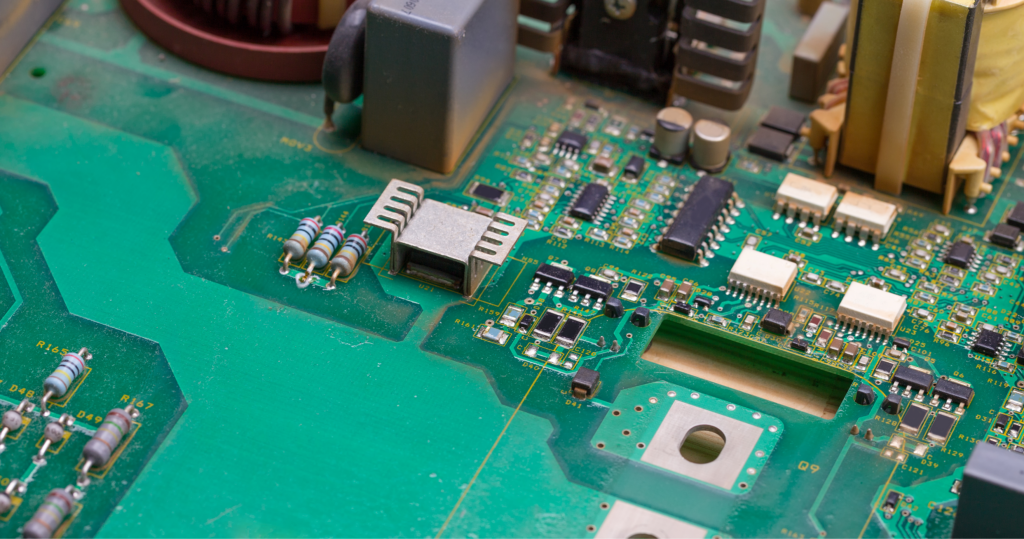
Future transmitters will move well beyond the traditional 4–20 mA signal. Processing power will sit at the “edge”, directly on the sensor itself.
- On-board diagnostics will allow transmitters to perform continuous self-health checks, detecting internal diaphragm fatigue or electrical drift before a failure can occur. This eliminates unplanned downtime at its source.
- Smart filtering will enable IoT-enabled sensors to distinguish process noise such as pump vibrations or fluid sloshing from meaningful data, sending only clean, actionable signals to the cloud rather than raw, unfiltered streams.
- Multi-variable sensing is also on the horizon. Future units are expected to integrate pressure, temperature, and vibration sensing into a single smart probe, providing a complete picture of process media conditions without multiple separate instruments.
How Do Wireless IoT Transmitters Enable Remote Monitoring in Hazardous Locations?
For sensors in remote or hazardous locations, eliminating traditional wiring is a significant operational advantage.
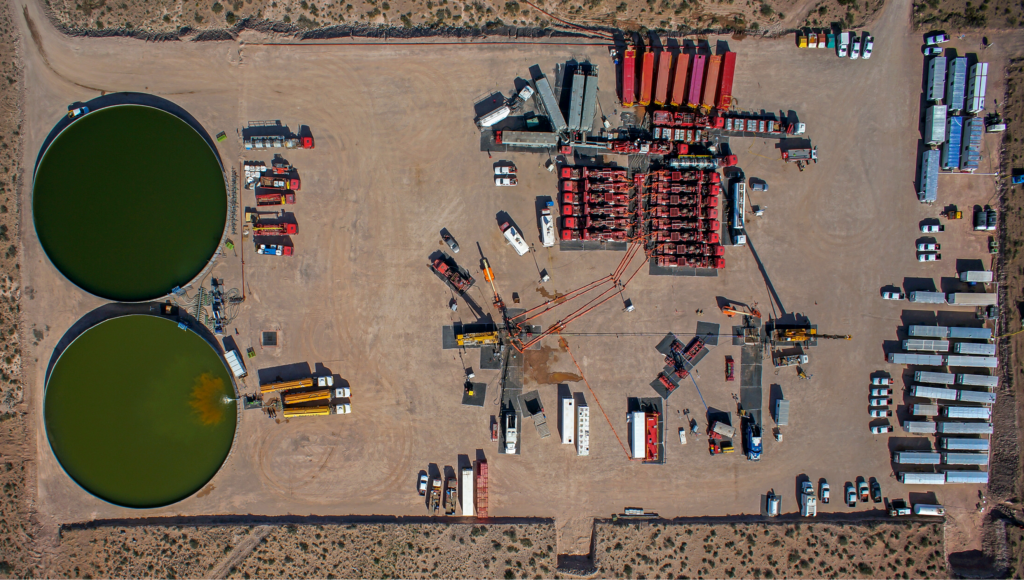
- LPWAN and cellular IoT protocols including LoRaWAN, NB-IoT, and 5G allow transmitters to send data over long distances with minimal battery consumption. This is particularly valuable for monitoring wellhead pressures or remote water reservoirs where laying cable infrastructure is costly or impractical.
- Mobile accessibility means facility managers can monitor tank levels and system pressures directly from a smartphone, with push notifications triggered the moment a set point is exceeded.
- Satellite integration is the next frontier. For offshore platforms and global logistics operations, IoT transmitters will increasingly rely on low-earth orbit (LEO) satellite networks to maintain uninterrupted connectivity in the most remote locations on earth.
How Digital Twins and Predictive Maintenance Reduce Downtime in Process Industries
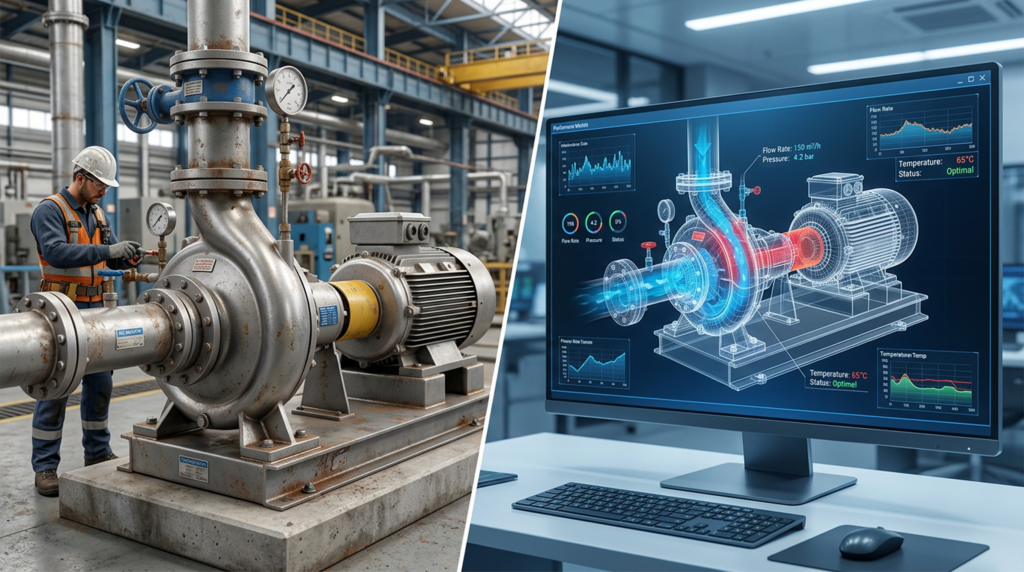
IoT-enabled transmitters serve as the real-time data source for digital twins, virtual models that replicate the behavior of physical systems.
- Simulation and modeling allow engineers to feed live pressure data into a digital twin and run “what-if” scenarios, such as evaluating the impact of a pump speed increase on system longevity, without risking the physical asset.
- Remaining Useful Life (RUL) prediction uses machine learning to analyze historical pressure trends and forecast when a sensor or pump will require service. This shifts operational focus from fixing failures to preventing them, delivering measurable ROI improvements.
- Automated procurement represents the most advanced application. In a fully realized IIoT environment, a level transmitter can automatically trigger a purchase order for process fluid once the reservoir reaches a defined threshold, ensuring continuous supply chain operation without human intervention.
Why Cybersecurity and Blockchain Traceability Are Now Critical for IIoT Sensors
As transmitters join connected networks, cybersecurity becomes an engineering priority, not an afterthought.
- End-to-end encrypted data streams will protect critical infrastructure from man-in-the-middle attacks, ensuring that pressure and level data cannot be intercepted or manipulated in transit.
- Blockchain for compliance offers an immutable audit trail for highly regulated industries. In pharmaceutical manufacturing or nuclear power, sensor data written to a blockchain cannot be altered – providing verifiable, tamper-proof records of pressure and level history for auditors and regulatory bodies.
About Whitman Controls and Industrial Control Solutions
Whitman Controls, part of Industrial Control Solutions, has been manufacturing precision vacuum, temperature, pressure, and liquid level switches and sensors for over 40 years. What began as a focused instrumentation manufacturer has grown into a trusted name across some of the most demanding industries in the world – aerospace, defense, semiconductor, medical and industrial automation.
As a Service-Disabled Veteran-Owned Small Business, Industrial Control Solutions was built on the same principles that define military service: tireless dedication, rigorous quality standards, and an unwavering commitment to the mission. That foundation isn’t marketing language, it shapes how we engineer every product, handle every order, and support every client relationship.
We don’t offer off-the-shelf compromises. Every sensor solution we build is configurable to your exact application, accounting for media environment, pressure range, temperature exposure, mounting constraints, and dozens of other specifications. If a standard product doesn’t meet your requirements, we build one that does and we back it with full documentation and traceability at every step.
Every product ships with full traceability documentation under our ISO 9001:2015 certification, giving customers confidence that internal processes, materials, and finished products have all met the highest standards of quality and regulatory compliance.
At Industrial Control Solutions, our most loyal clients have been with us for the entirety of our 40+ years in business. That kind of partnership isn’t accidental. It is the direct result of a commitment to delivering exactly what we promise; high-quality products, built to specification, backed by people who stand behind their work.
Our product portfolio spans four specialized USA-manufactured lines:
Whitman Controls – Vacuum, pressure, temperature, and liquid level switches engineered for precision and durability in extreme environments
Load Controls – Pump load controls, compact power sensors, fast-response load controllers, current sensors, and VFD-compatible solutions
Thomas Products – Flow switches, level switches, pump controls, multi-level switches, and visual indicators
Duro-sense – High-quality platinum and noble thermocouples, RTDs, and ISO 17025 calibrated wire
Frequently Asked Questions
1. What is the difference between a traditional pressure transmitter and an IoT-enabled one?
A traditional pressure transmitter converts a physical measurement into an analog signal, typically 4–20 mA and sends it to a control system. An IoT-enabled transmitter goes further: it processes data locally at the edge, communicates wirelessly over protocols like LoRaWAN or 5G, integrates with cloud platforms, and can trigger automated responses without human involvement. The shift is from passive signal generation to active, intelligent monitoring.
2. How does predictive maintenance using pressure transmitters reduce operational costs?
Predictive maintenance uses machine learning algorithms to analyze historical and real-time pressure data, identifying patterns that precede equipment failure. Instead of scheduling maintenance at fixed intervals or reacting after a breakdown, facilities can service equipment precisely when needed. This reduces unplanned downtime, extends equipment lifespan, and lowers both labor and parts costs significantly over time.
3. Are wireless IoT transmitters reliable enough for critical industrial applications?
Yes, when deployed correctly. Modern LPWAN protocols such as NB-IoT and LoRaWAN are specifically designed for industrial reliability offering low power consumption, long range, and strong signal penetration. For the most critical applications, redundant communication paths (cellular plus satellite, for example) can be configured to ensure continuous data availability even in remote or signal-degraded environments.
4. How is sensor data secured in an IIoT environment?
Next-generation IIoT transmitters are being designed with end-to-end encryption built into the firmware, preventing unauthorized interception of data in transit. For industries with strict regulatory requirements such as pharmaceuticals or nuclear power, blockchain technology can provide an immutable, time-stamped record of all sensor readings, making it virtually impossible to alter historical data without detection.
5. What industries benefit most from IoT-enabled pressure and level transmitters?
Oil and gas, water and wastewater management, pharmaceutical manufacturing, chemical processing, and food and beverage production are among the primary beneficiaries. Any industry that relies on continuous process monitoring, operates assets in remote or hazardous locations, or faces strict regulatory compliance requirements stands to gain significantly from deploying IIoT-connected transmitters.