
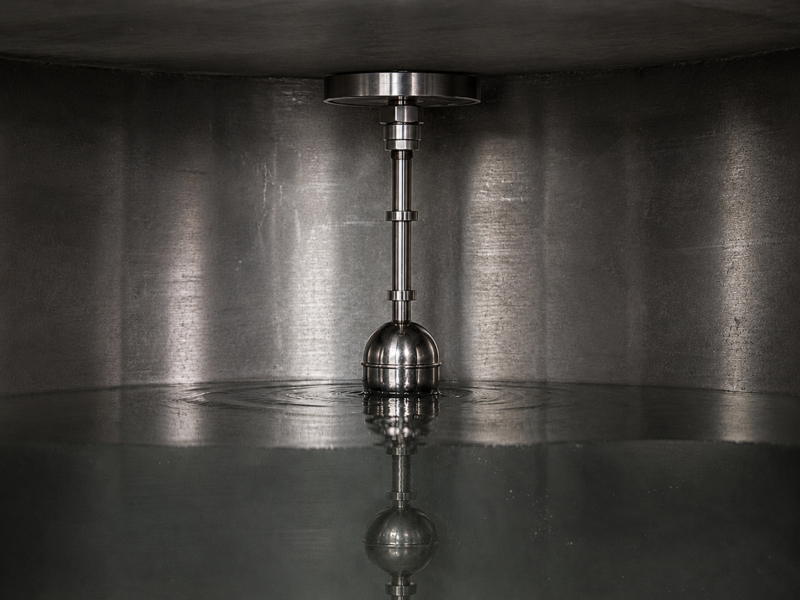
In complex industrial systems, a single data point is often insufficient to ensure operational safety and efficiency. Multi-level switches are engineered to provide multiple discrete feedback signals from a single installation point, allowing for sophisticated control logic within one vessel. By monitoring several elevations simultaneously, these devices eliminate the need for multiple separate sensors, reducing system complexity and installation costs. At Whitman Controls, we offer custom-configured multi-level solutions that bring a new layer of automation to critical fluid reservoirs.
What Does a Multi-Level Switch Do? Comprehensive System Protection and Automation
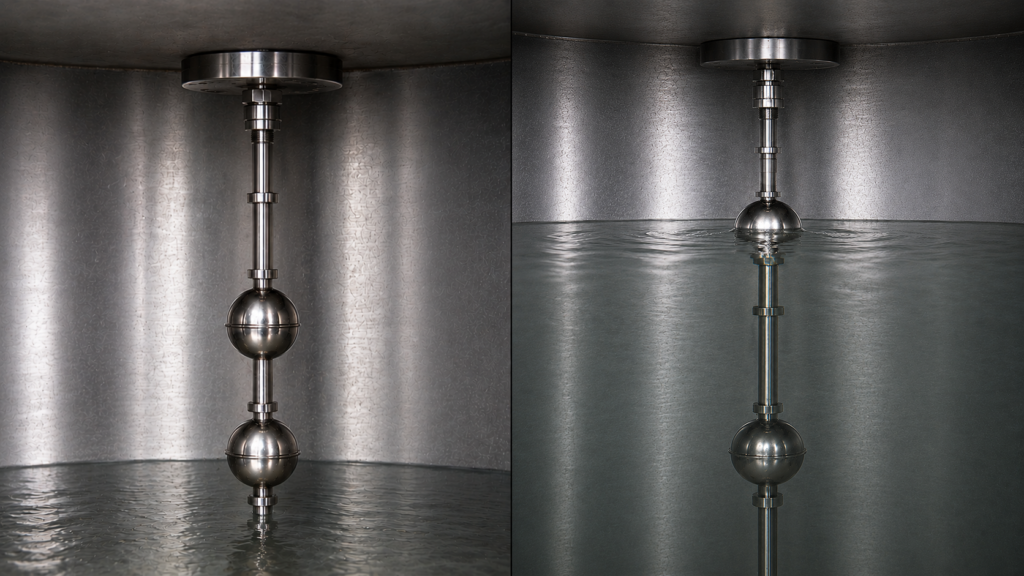
The primary advantage of a multi-level switch is the ability to program different system reactions based on the fluid’s exact position. Instead of a simple “on/off” signal, operators can establish a hierarchy of alerts and automated actions to prevent equipment failure.
- Low-Level Warning: The first float can trigger an annunciator to warn operators of declining fluid, often caused by leaks or large tool consumption.
- Emergency Safety Cut-Out: A second, lower float can initiate an emergency stop condition if levels become dangerously low, maintaining system pressure to prevent tool drops or pump stall-outs.
- High-Level Overflow Prevention: An upper float can alert staff to unbalanced flows or thermal expansion, preventing hazardous spills.
- Consolidated Footprint: Using a single center shaft for up to six level points saves significant space on the tank head and simplifies wiring back to the controller.
How Do Multi-Level Switches Simplify Installation and Reduce Maintenance?
Multi-level switches provide “value-added” benefits by simplifying the physical requirements of a system. Because only one process connection is required, there are fewer potential leak points and less hardware to maintain.
Key advantages of side-mount switches:
- Custom Configurations: Whitman’s L30 series can be built with up to five or six Buna or stainless steel floats at customer-specified elevations.
- Ease of Integration: These assemblies often use standard 1-1/2″ NPT or flanged connections, making them suitable for top or bottom mounting in existing reservoirs.
- Standardization Success: Moving from dozens of individual models to a single multi-level design can reduce spare part inventory needs by as much as 16%.
- Enhanced Reliability: Since these sensors are frequently used in heavy industrial environments, they are engineered for severe-duty durability and are compatible with hydraulic oils up to 230°F.
Multi-Level Switch Applications: Hydraulic Power and Industry Success
Many premier equipment manufacturers have integrated multi-level switches to address safety risk factors identified through end-user feedback.
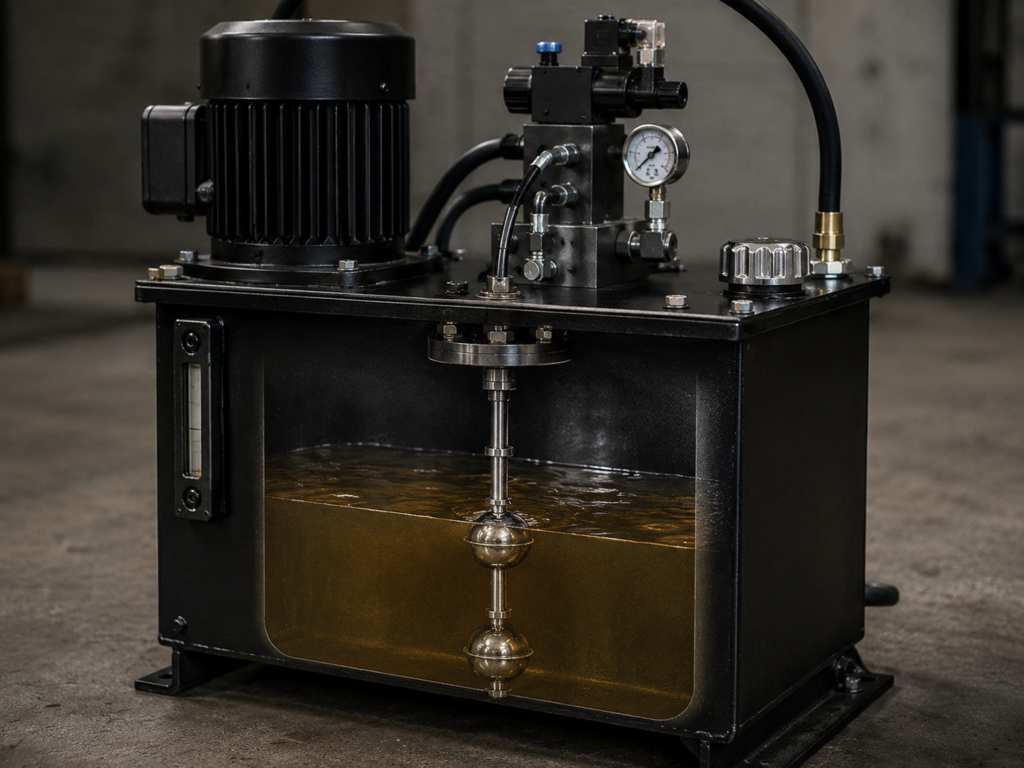
- Portable Power Units: Manufacturers use the L30 series to protect against air entrainment, achieving a 100% reduction in tool failure due to dry reservoirs.
- Maintenance Efficiency: Avoiding air in hydraulic circuits leads to an estimated 20% improvement in power pack maintenance costs.
- Quick Customization: Whitman can engineer and ship custom-spec multi-level sensors in as little as 2 to 3 weeks to keep projects on schedule.
- Robust Ratings: Submersible potted floats rated to NEMA 6 ensure that even in sloshing or flooded conditions, the switch maintains continuity.
About Whitman Controls and Industrial Control Solutions
Whitman Controls, part of Industrial Control Solutions, has been manufacturing precision vacuum, temperature, pressure, and liquid level switches and sensors for over 40 years. What began as a focused instrumentation manufacturer has grown into a trusted name across some of the most demanding industries in the world – aerospace, defense, semiconductor, medical and industrial automation.
As a Service-Disabled Veteran-Owned Small Business, Industrial Control Solutions was built on the same principles that define military service: tireless dedication, rigorous quality standards, and an unwavering commitment to the mission. That foundation isn’t marketing language, it shapes how we engineer every product, handle every order, and support every client relationship.
We don’t offer off-the-shelf compromises. Every sensor solution we build is configurable to your exact application, accounting for media environment, pressure range, temperature exposure, mounting constraints, and dozens of other specifications. If a standard product doesn’t meet your requirements, we build one that does and we back it with full documentation and traceability at every step.
Every product ships with full traceability documentation under our ISO 9001:2015 certification, giving customers confidence that internal processes, materials, and finished products have all met the highest standards of quality and regulatory compliance.
At Industrial Control Solutions, our most loyal clients have been with us for the entirety of our 40+ years in business. That kind of partnership isn’t accidental. It is the direct result of a commitment to delivering exactly what we promise; high-quality products, built to specification, backed by people who stand behind their work.
Our product portfolio spans four specialized USA-manufactured lines:
Whitman Controls – Vacuum, pressure, temperature, and liquid level switches engineered for precision and durability in extreme environments
Load Controls – Pump load controls, compact power sensors, fast-response load controllers, current sensors, and VFD-compatible solutions
Thomas Products – Flow switches, level switches, pump controls, multi-level switches, and visual indicators
Duro-sense – High-quality platinum and noble thermocouples, RTDs, and ISO 17025 calibrated wire
Frequently Asked Questions About Multi-Level Switches
What is a multi-level switch and how does it work?
A multi-level switch provides multiple discrete feedback signals from a single installation point inside a tank or reservoir. Each float on a center shaft actuates independently at a preset elevation, triggering different system responses such as a low-level warning, emergency cut-out, or overflow alert, rather than a simple on/off signal.
How many floats can a multi-level switch have?
Whitman Controls’ L30 series can be configured with up to five or six floats per assembly, each positioned at customer-specified elevations. Both Buna and stainless steel float materials are available depending on the fluid and temperature requirements.
Can a multi-level switch replace multiple individual level sensors?
Yes. Because only one process connection is required, a multi-level switch replaces multiple separate sensors, reducing leak points, wiring complexity, and spare parts inventory. Standardizing on a single multi-level design has been shown to reduce spare part inventory needs by as much as 16%.
What industries use multi-level switches?
Multi-level switches are widely used in hydraulic power units, portable power equipment, and heavy industrial fluid systems. Manufacturers in these sectors use them to prevent air entrainment, protect against dry-run pump conditions, and automate overflow prevention.
How quickly can Whitman Controls ship a custom multi-level switch?
Whitman Controls can engineer and ship custom-configured multi-level switches in as little as 2 to 3 weeks, accommodating specific float counts, elevations, materials, and connection types to keep projects on schedule.