
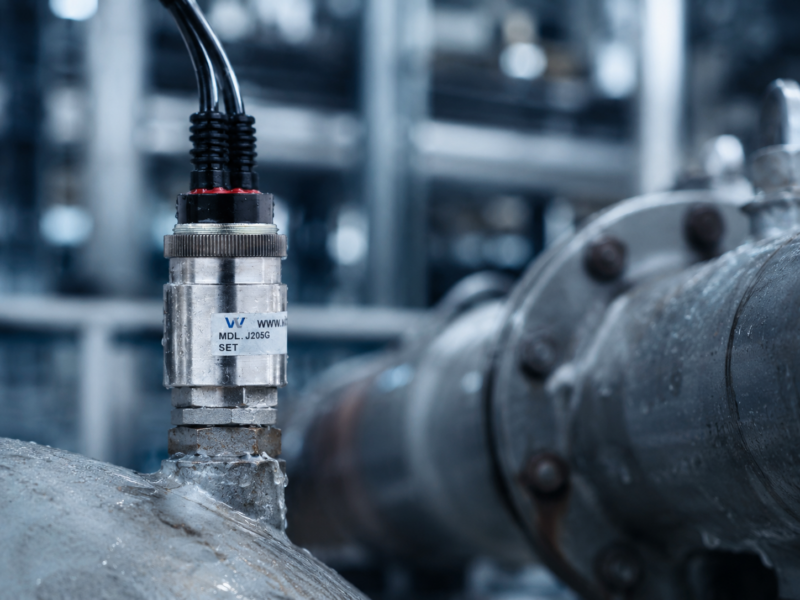
Why Stainless Steel Pressure Switches Outperform in Harsh Conditions
In industrial process controls, selecting the right material for wetted parts is just as critical as the electrical specifications. When dealing with aggressive chemicals, volatile vapors, or harsh outdoor exposure, stainless steel is the gold standard for maintaining system integrity and sensor accuracy. At Whitman Controls, we utilize premium stainless steel alloys to ensure our instruments outperform expectations in environments where ordinary materials would fail.
How Stainless Steel Fights Back Against Corrosive Media
The primary advantage of a stainless steel pressure switch is its ability to withstand chemical attacks from corrosive media that would degrade zinc or aluminum housings. This resistance is vital for preventing leaks and protecting against the buildup of reactants that can lead to false readings or mechanical failure.
- Aggressive Chemistry: 316/316L stainless steel is frequently specified for its compatibility with volatile disinfectant chemicals, acids, and solvents.
- Hygienic Standards: In medical and food-grade systems, stainless steel provides a non-reactive, nonporous surface that prevents contamination and meets rigorous purity standards.
- Oxidization Defense: Stainless steel components are essential for ozonated water systems to withstand the intense oxidizing effects of ozone gas.
- Refining Reliability: In crude oil applications, shifting from standard materials to stainless steel or specialized polymeric switches, is often necessary to combat corrosion from sulfur, chlorides, and organic acids.
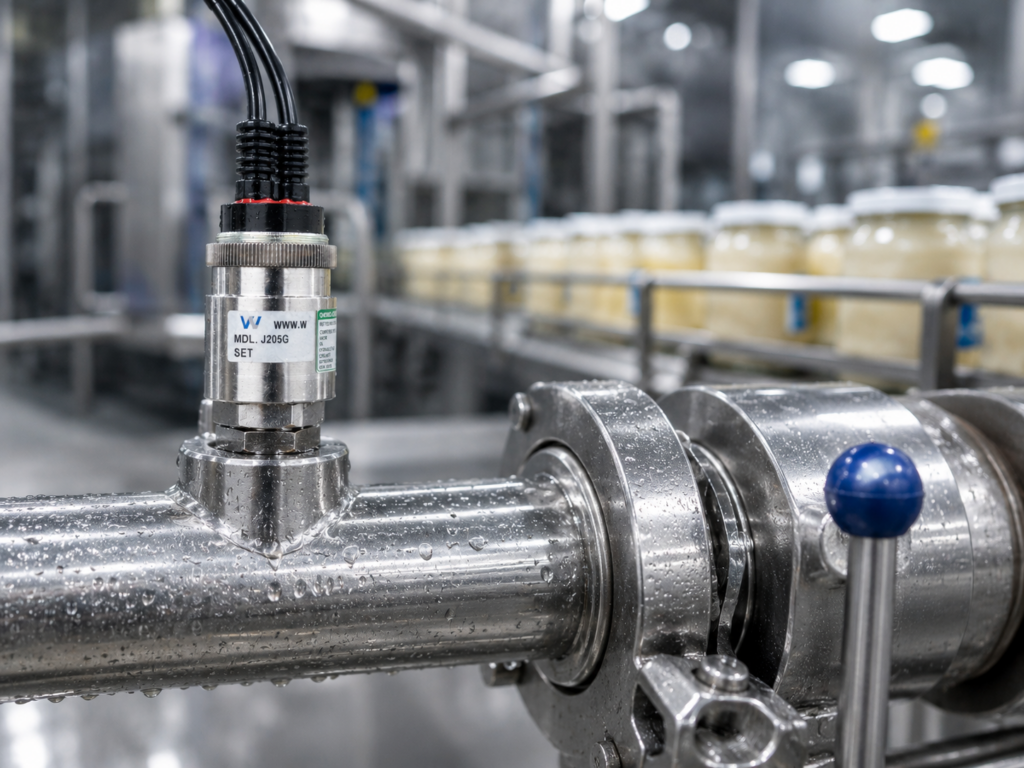
Built to Last – Durability and Structural Strength of SS Switches
Stainless steel switches provide a higher tier of mechanical strength, allowing them to operate reliably under extreme physical stress. This durability ensures that the sensor maintains its actuation set point even when subjected to the rapid swings and spikes typical of heavy industrial equipment.
- High Pressure Capability: Piston-actuated models like the Whitman J705G utilize stainless steel construction to withstand pressure spikes up to 9,000 PSIG without compromising functionality.
- Thermal Stability: Stainless steel sensors are ideal for elevated temperature environments, such as medical radiography or aerospace fabrication, where they can withstand continuous loads up to 225°F or higher.
- Mechanical Resilience: Materials like 17-7 PH and 303/316 stainless steel offer superior resistance to vibration, mechanical shock, and high cycle counts.
- Ultra Pure Construction: Models like the W117V utilize fully welded stainless steel interiors that are helium leak-tested to pass stringent leakage standards for semiconductor and medical use.
Outdoor, Marine, and Weatherproof Performance
In applications exposed to the elements, moisture and salt air can quickly destroy standard industrial sensors. Stainless steel pressure switches are often NEMA 4 or NEMA 6 rated, providing essential protection against weather-driven damage.
- Weatherproof Protection: NEMA 4 rated stainless steel switches, such as the P117LG, are specifically designed for outdoor applications or areas of condensing humidity.
- Submersible Reliability: For marine or wetland applications, stainless steel housings remain liquid-resistant and can survive brief submersion in salt water without corroding.
- Potable Water Safety: In potable water systems, stainless steel sensor elements are preferred to ensure no contamination enters the water supply.
- Longevity: Using premium materials reduces the frequency of replacements and service calls, providing significant cost savings and long-term operational stability.
About Whitman Controls and Industrial Control Solutions
Whitman Controls, part of Industrial Control Solutions, has been manufacturing precision vacuum, temperature, pressure, and liquid level switches and sensors for over 40 years. What began as a focused instrumentation manufacturer has grown into a trusted name across some of the most demanding industries in the world – aerospace, defense, semiconductor, medical and industrial automation.
As a Service-Disabled Veteran-Owned Small Business, Industrial Control Solutions was built on the same principles that define military service: tireless dedication, rigorous quality standards, and an unwavering commitment to the mission. That foundation isn’t marketing language, it shapes how we engineer every product, handle every order, and support every client relationship.
We don’t offer off-the-shelf compromises. Every sensor solution we build is configurable to your exact application, accounting for media environment, pressure range, temperature exposure, mounting constraints, and dozens of other specifications. If a standard product doesn’t meet your requirements, we build one that does and we back it with full documentation and traceability at every step.
Every product ships with full traceability documentation under our ISO 9001:2015 certification, giving customers confidence that internal processes, materials, and finished products have all met the highest standards of quality and regulatory compliance.
At Industrial Control Solutions, our most loyal clients have been with us for the entirety of our 40+ years in business. That kind of partnership isn’t accidental. It is the direct result of a commitment to delivering exactly what we promise; high-quality products, built to specification, backed by people who stand behind their work.
Our product portfolio spans four specialized USA-manufactured lines:
Whitman Controls – Vacuum, pressure, temperature, and liquid level switches engineered for precision and durability in extreme environments
Load Controls – Pump load controls, compact power sensors, fast-response load controllers, current sensors, and VFD-compatible solutions
Thomas Products – Flow switches, level switches, pump controls, multi-level switches, and visual indicators
Duro-sense – High-quality platinum and noble thermocouples, RTDs, and ISO 17025 calibrated wire
Frequently Asked Questions
Q1: Why is stainless steel preferred over aluminum or zinc in pressure switches for corrosive environments?
Stainless steel, especially 316/316L grade, resists chemical attack from acids, solvents, and chlorides far better than aluminum or zinc. It prevents housing degradation that can cause leaks, false readings, or complete sensor failure in aggressive media environments.
Q2: What pressure ratings can stainless steel pressure switches handle?
High-performance models like the Whitman J705G are engineered to handle pressure spikes up to 9,000 PSIG. This makes stainless steel piston-actuated switches well-suited for hydraulic systems, oil refining, and other high-pressure industrial processes.
Q3: Are stainless steel pressure switches safe for food-grade and medical applications?
Yes. Stainless steel offers a non-reactive, nonporous surface that meets hygienic standards required in food processing, pharmaceutical, and medical equipment environments. Models like the W117V are helium leak-tested for use in semiconductor and medical-grade systems.
Q4: Can stainless steel pressure switches be used outdoors or in marine environments?
Absolutely. Many stainless steel pressure switches carry NEMA 4 or NEMA 6 ratings, making them weatherproof and capable of resisting salt air, condensing humidity, and even brief submersion; ideal for marine, wetland, and outdoor industrial installations.
Q5: How do stainless steel pressure switches perform at high temperatures?
Stainless steel sensors maintain structural integrity and accurate actuation at continuous operating temperatures up to 225°F and beyond, making them reliable in environments like aerospace fabrication, medical radiography, and high-heat industrial processes.